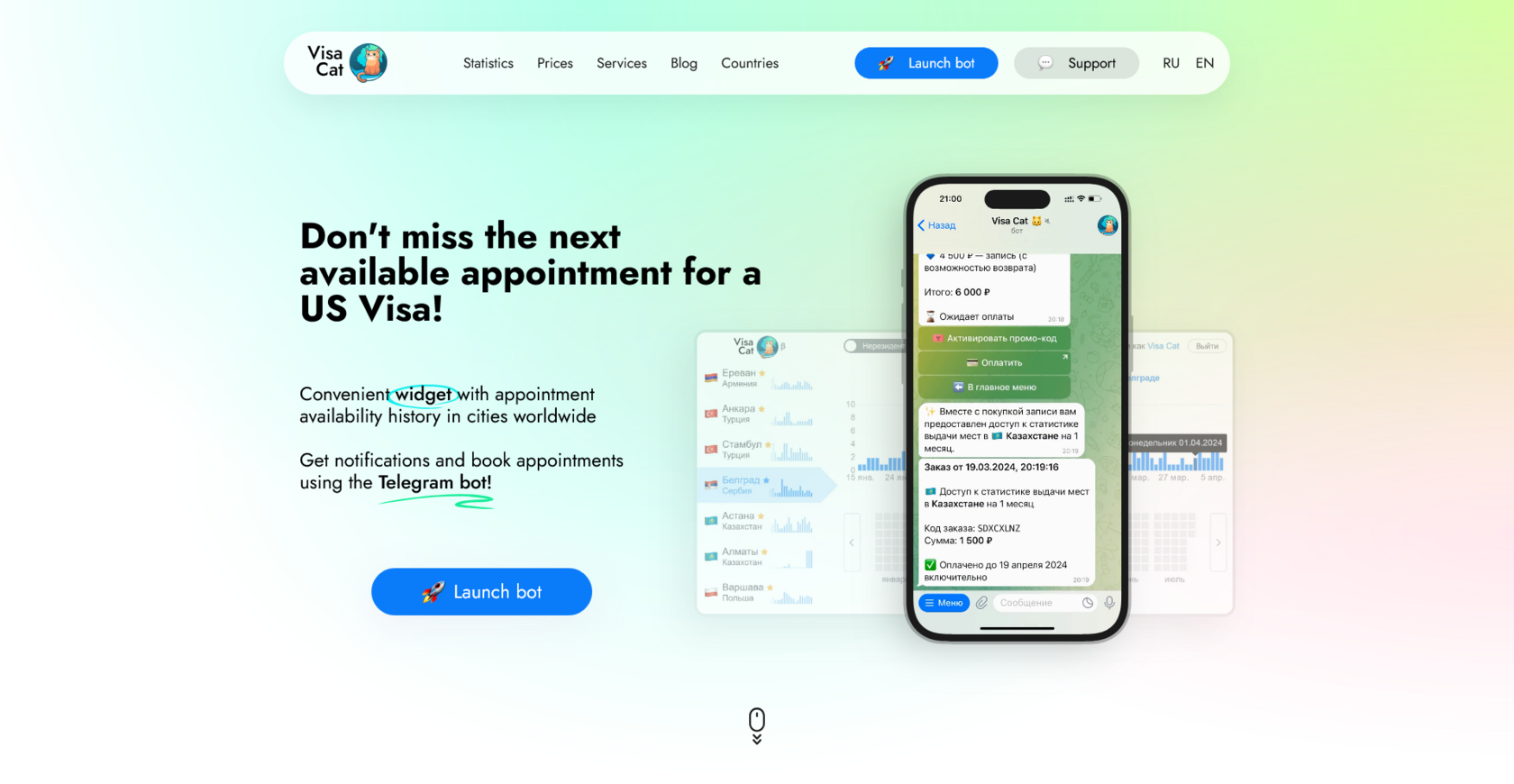
Client: A service for automatic US tourist visa appointments with a blog made on Tilda and content relevant to a global audience that was unaware of it.
View result: visacat.ru/en
Context
After the 2020 pandemic, obtaining a US visa became significantly more difficult — appointment slots were scarce, and queues were filled within minutes. Bots emerged to monitor slots, and visacat was one of them.
The project's audience is Russian-speaking. But besides them, people from all over the world seek US visas: from Argentina, India, Indonesia, European countries. There was demand in English — the site simply couldn't capture it because it was only in Russian.
English version connected in 5 minutes
There was no specific strategy and no long-term plans for international SEO either. We simply added the project to Multify as an experiment, enabling English.
Multify automatically created an English version of all pages with separate URLs, added hreflang tags, and updated the sitemap. This was enough for Google to see the new pages. After that, no additional work was done on the site. Not even content was published.
The first sign that something had happened was English-language chat support requests from users with foreign names. In the case of this project, we had access to the Google console, so we were able to analyze the situation.
What Google Search Console Showed
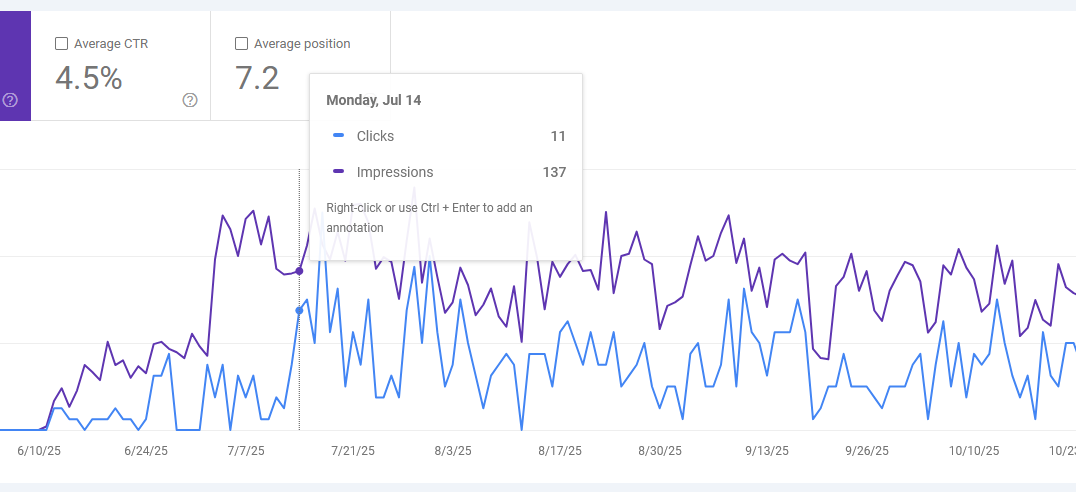
Before connecting, there were no impressions for English queries at all. This is logical: after all, the site was only available in Russian on the Internet. After connecting, traffic started immediately and stabilized in about a month:
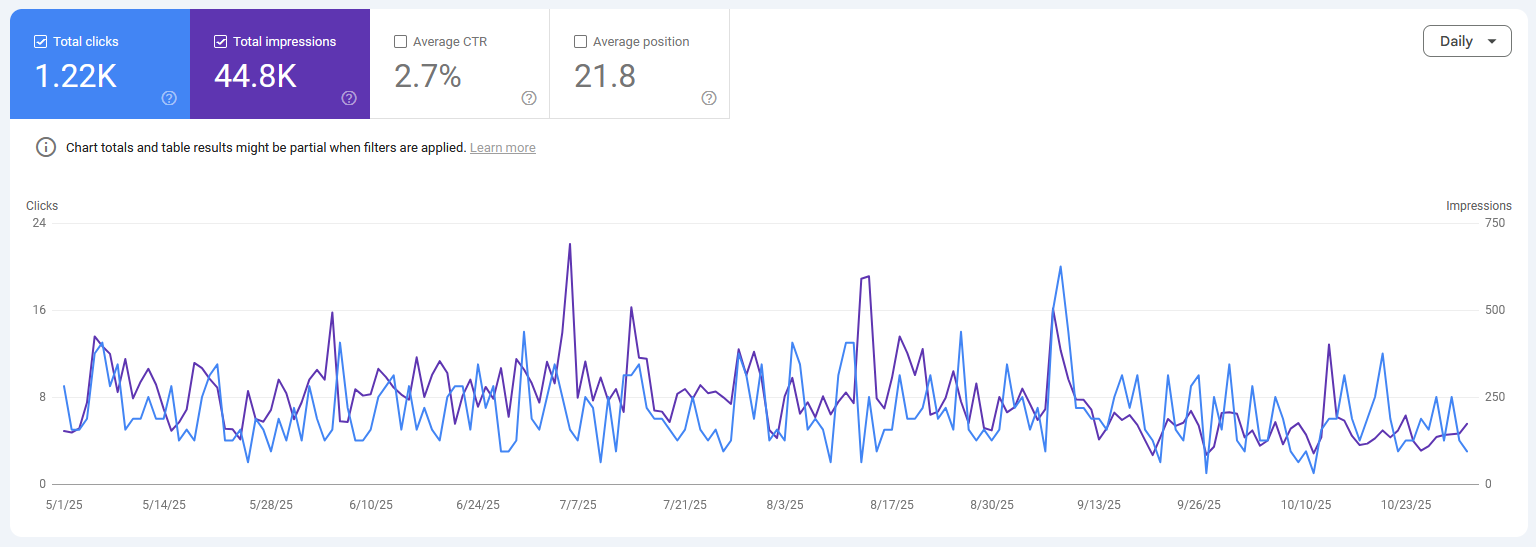
Russian version: 1,220 clicks, 44,800 impressions
Interestingly, during this time, probably due to content stagnation, the Russian version slightly declined:
At the same time, the English version remained quite stable:
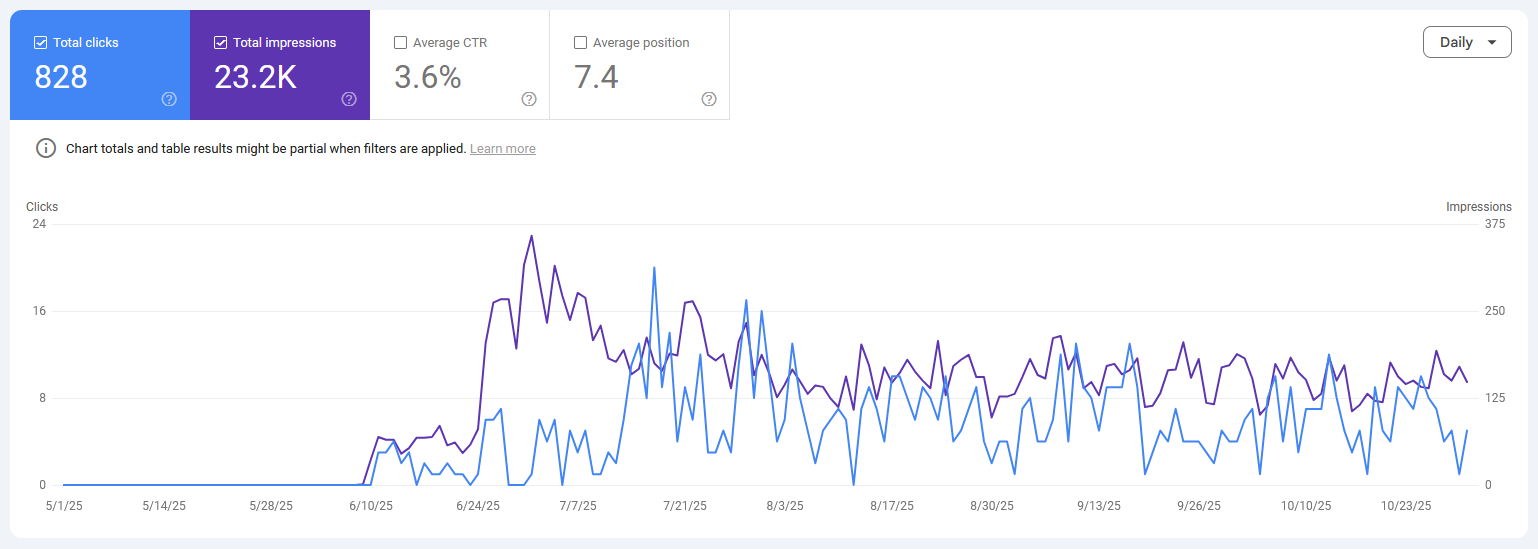
The picture is most noticeable if you look at the monthly chart from March to September. Recall that we connected the English version in early June:
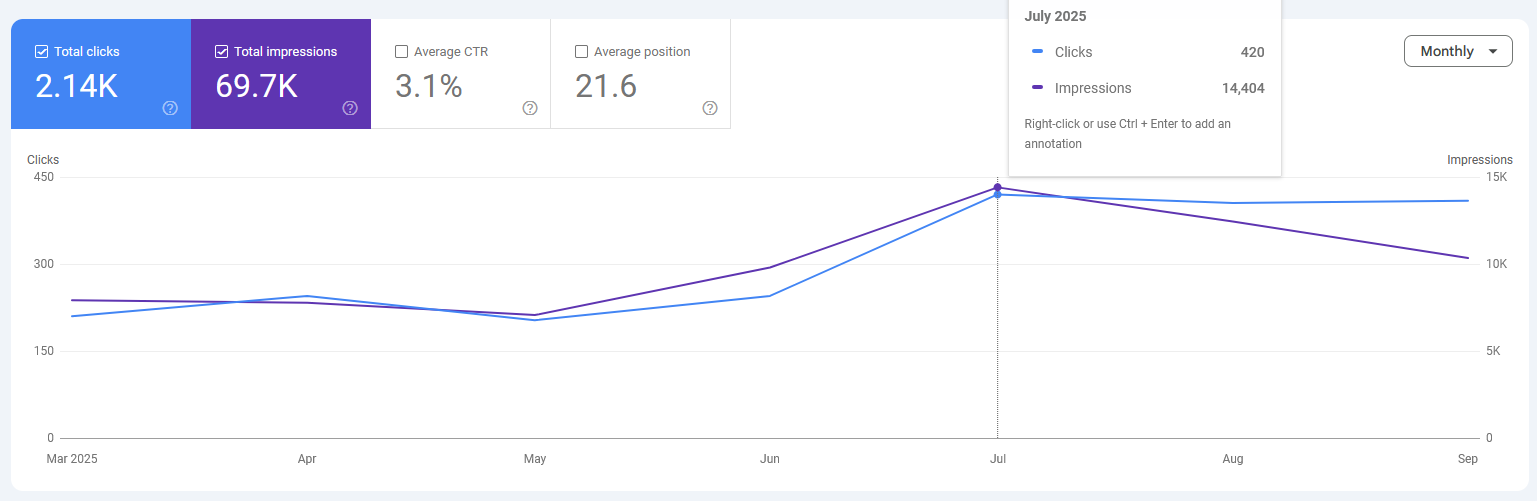
The graph shows an approximate twofold increase in both impressions and clicks — this means that the content in Russian has the same relevance in English. It turns out that we practically doubled the site's reach without significant labor costs. Of course, it is impossible to guarantee such growth for another project; no SEO specialist will ever give you a 100% guarantee.
By the way, why did we indicate +30% in the title if the graph actually shows +50%?
The thing is, first, it's too good to be true, many might not believe it. Second, it's not a given that the audience is exactly the same target audience as for Russian. After all, fewer applications came in English. Often, it's better to make a conservative estimate in forecasts, as we never know the full picture. A 20% "buffer" is standard engineering practice; we don't want to talk about gold mines when considering whether to add a second language.
However, one thing can be said for sure: connecting your site for a few months with minimal effort and investment to conduct an experiment is quite reasonable.
Why it worked
The niche turned out to be international from the start. There was already demand in English, but no one to capture it. And the site was already receiving Russian-speaking traffic from Google, so new language pages didn't start from scratch.
Google does not rank a Russian page for an English query, even if the content is semantically similar. As soon as an English version with correct tags appeared, the search engine started showing it to the right audience.
This is not a universal formula; for sites without international demand, the result will be different. But if your site's topic is inherently relevant to a global audience, then the language barrier is the only thing holding you back.